Friday 23 March 2007

Djenne and back to Pays Dogon


Con arrived on Monday, which is market day in Djenne, so we decided it would be worth a detour to the famous town. We took a ferry across the Bani river, which is very low at this time of year, and drove along a causeway - in wet season the town is almost surrounded by water. We crawled through the busy streets to the main square and parked under the wall of the great mosque, the largest mud building in the world. The market is wonderfully chaotic, and ideal for short people, as the awnings are all tied about four feet from the ground. We bought potatoes, onions, lemons, bananas, ginger and tomatoes, and Con got a little carved Dogon granary door. 


The dust was choking, and after exploring a little we retreated to the courtyard of Chez Baba, a hotel near the square, for a beer (the inferior Flag instead of Castel). The sun did not set, but faded into the dust haze, as trucks were packed with goods and people. When the crowd had dispersed we moved the car to the hotel, and slept on the roof, with a fine view of the mosque and only a few mosquitoes. 


From Djenne we drove into Dogon country again, taking the same route though Sanga that Stefanie and I followed last week. We camped under the ancient rocks of the escarpment, so peaceful that I could hear the sound of bat wings in the night. In the morning we spent a couple of hours fixing stuff in the car, visited by a group of small boys. They almost fought over who would do the breakfast dish washing, and in the end one passed the dirty items, one washed, one dried and one stacked the clean items. They gave the stove a good cleaning too, and ate our left over pasta. 


A few miles on, we explored one of the villages, invited by a resident. He led us up a boulder track to the old village, now mostly abandoned. It has water, but the effort of carrying goods up and down has resulted in most people moving to the new village below. Only his family remain, and his wife was at work pounding couscous in their courtyard. He was very proud of his little terraces of crops, including onions, tobacco, papaya and banana, irrigated from the spring by hand using calabashes.


Monday 19 March 2007

Photos from the road, Mali


I have picked Con up now, and we are off to Timbuktu. I expect we will not have internet access for a week or so, until we reach Niamey in Niger.

Sunday 18 March 2007

Hombori

After a few days in Sanga, we moved on via a sandy track to the North. It runs below the escarpment, with plenty of scenic villages, acacias, mangoes and baobabs. 

We came back to the tar at Doeuntza to find the town in great excitement. Le President de la Republic was in town, along with an entourage of at least 50 Toyota Land Cruisers. Many in the crowd were wearing political t-shirts. The Fula women have tattoos around their mouths, and many men were carrying homemade flint muskets, which did not seem a security risk to the mirror-sunglasses of the presidential guard.


After a night in Douentza, we continued East, passing eroded hills and mesas, and camping in view of one formation near Hombori. This area feels remote, there is almost no traffic and fewer villages. We stopped to give lifts to young men, who stood on the back bumper hanging onto the rack. And when returning we made space inside on the luggage for a young Dogon woman who was going to Bamako for work. She was setting off for the 24 hour journey with no belongings at all.


From Hombori we made the long journey back to Bamako via the tar road, overnighting in Sevare and Segou. I left Stefanie to get her flight home, and turned back for Sevare to pick up the next co-driver, Con, who is flying in there directly via Marseilles.
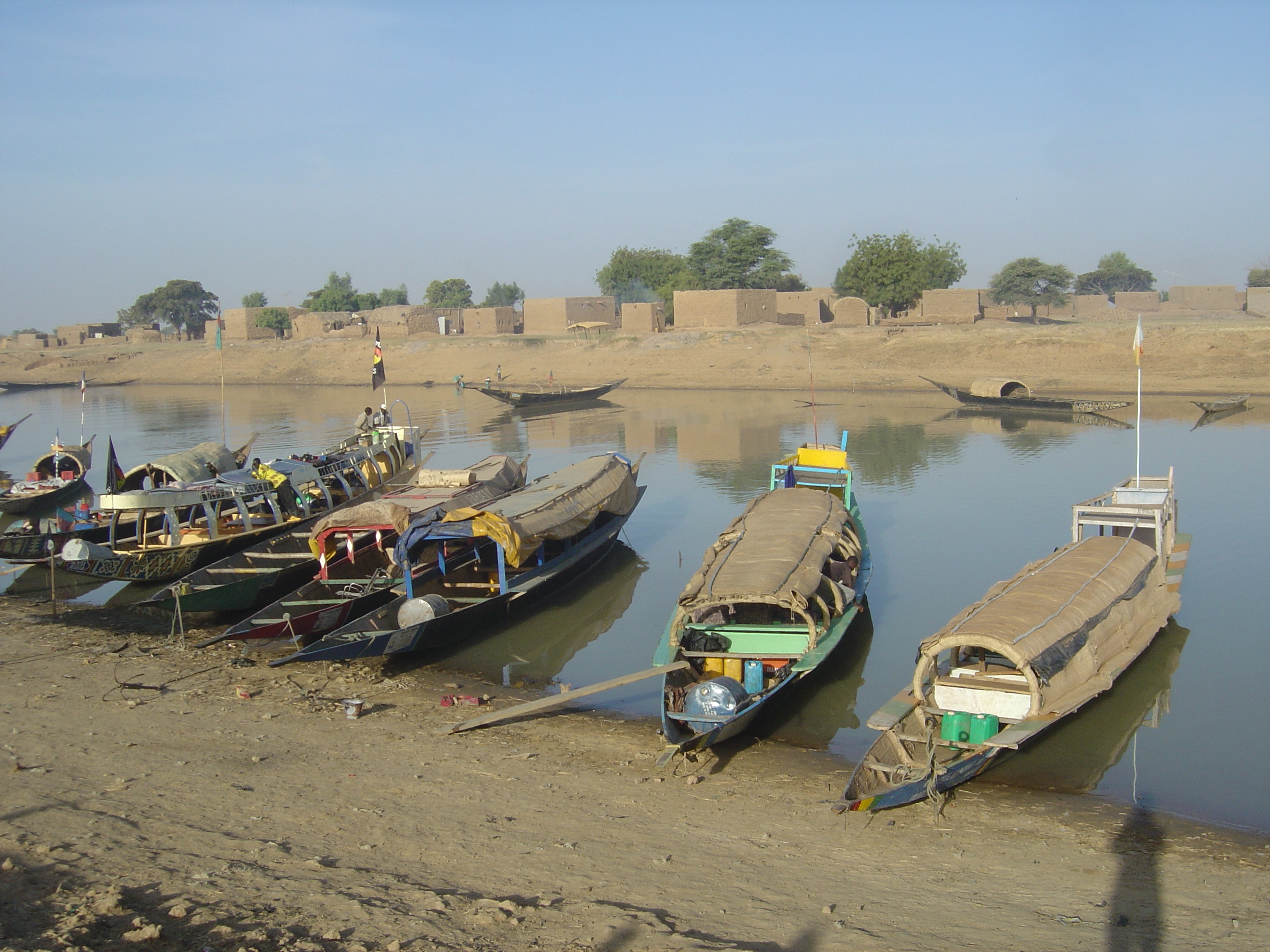
We took a hitchhiker back from Hobori to Sevare


In the Pays Dogon


If a set designer dreamed up an African village it would probably look like a Dogon village. They have a distinctive architecture that is bound to their culture and animist beliefs. Wall foundations are chunks of local sandstone, but the house and granary walls are a smooth blend of mud, straw and cow dung. The square, tall granaries are roofed in picturesque hats of straw, while the houses have flat roofs, useful for drying grains and tamarind, and for sleeping when the hot season comes (any day now). 


Then there are the meeting houses, which are constructed from beautifully carved posts, and roofed with thick layers of reeds. A new layer is added for each generation. The doors and windows are also beautifully carved, and they make ladders by notching tree trunks. Many of the villages are planted on boulders on steep cliffs under an escarpment. Add to all that some of the most beautiful baobabs and fig trees, and an interesting culture, and it is not surprising that the area is the prime tourist destination in Mali, although it is quiet now. Taking photos requires a negotiation each time, which is why I don't have many. 


We based ourselves in the clifftop village of Sanga, and each day drove down a steep track to explore the villages. Market days change on a 5 day cycle, but we visited two of them, always entertaining. Perhaps not so much for the goats who end up in pieces on a big wood fired grill. Life looks hard here. Despite the tourist revenue, pumps are out of action and there is endless well work and water carrying, which is probably easy compared to the millet and sorghum pounding in big wooden pestles. 

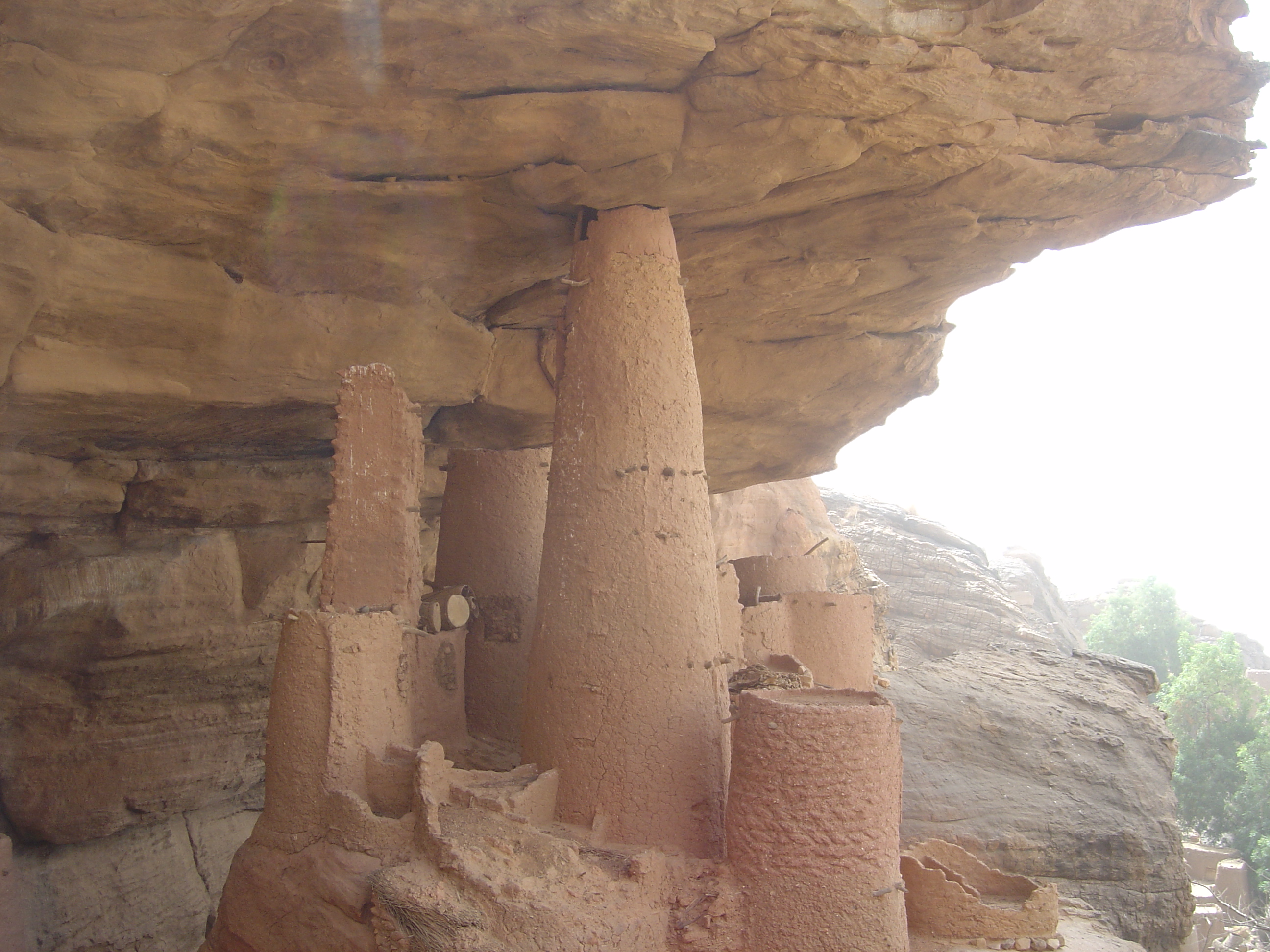
The top photo shows telem houses, at least 1000 years old, built by a pygmy people in cliff overhangs. The Dogon use them for storage and burials.


Thursday 15 March 2007

The Concert

Niafounké is the type of town where a donkey can sleep standing up in the middle of the main street and run no danger of causing an accident. But on March 7 it had a bit of a buzz, with hundreds of people in town for the concert to mark the anniversary of the death of Ali Farka Toure, the famous blues musician, mayor and rancher. There is a very good atmosphere to the place, nobody is in a hurry, and elaborate greetings are exchanged on every sandy corner. 


Stefanie and the other ladies bought cloth in the market, then left it with the tailors, who would have the garments sewed on their old Singer machines by the evening. The market was a bit disappointing, full of imported materials and Chinese tat. We had a beer on the roof of Ali's hotel, one of only two in town, and met one of his sons there, Vieux Farka Toure, also a musician. 


A big stage and sound system has been trucked in, and set up in the main square. The Minister for Culture and other dignitaries sat in arm chairs in the front row, and the concert kicked off with a local band. It hardly paused for the next six hours, with each act introduced by a great praise singer who kept the whole evening moving. It was chilly by the end, when Ali's band played a few of his best pieces. The minister looked very cosy, squeezed into the armchair with Nick Gold, head of World Circuit, and a rather large Tourag woman singer, Haïr Arby, who was one of the highlights of the evening.


[Artists included: L'Alkibar, Niafunké; Abdoul Kadr Moubda, Senegal; Andreas Fulgosi, Switzerland; Trio Morika Konyate; Sayo Kone; Bassekou Kouyate, Mali; Kanote; Ali Baba Cisse; Marcus James; Vieux Farka Toure; Haïr Arby, Mali ] 

We had about two hours on the mattress before the dawn call of the pinasse, and the return journey was just as relaxing as that downstream, with even the same groups of hippos yawning in the shallows.


Friday 9 March 2007

Welcome to Niafounké!

Bamako is the furthest South of the journey, and from here on it is Eastwards and Northwards, first following the Niger, then crossing the Sahara again. The city has two bridges over the Niger, both busy. But a much more interesting exit is over a low dam wall a little downstream. The longest day of driving, about 10 hours, took us on paved roads to Segou, Bla, San and on to Sévaré, near Mopti. We caught up with the Ali Farka Toure group at a hotel there, and had a dawn start for river trip to Niafounké.


Because it is dry season, the river is low, so we drove downstream an hour to Korro to meet the pinasse, a roofed pirogue. But it also means we saw lots of birds, and even the hippos had nowhere to hide, and we saw two groups in the water. Our group is very international - Malian, American, Portuguese, Spanish, German, French. We are the only tourists, the others having some connection with the AFT foundation, media or music industry. We are about a dozen and form more than half of the international contingent for the events in Niafounké. 

We sat on the roof of the pinasse when the sun's heat had faded, and with darkness spotted the lights of Niafounké in the distance, the only town with electricity in the region. Nothing could prepare us for the welcome we received. A few 4x4s were lined up with their lights on the "beach", where a crowd had been waiting for us since midaftertoon. We were swamped with helpers and handshakes and packed into the cars. The best part was our 2-wheeler escort, dozens of motos with a boy in orange T and girl in black T, who drove in two lines each side. With hazard lights flashing and horns blaring, we set off through town, throwing up a cloud of dust. We felt terribly important. 

We went straight to Ali Farka Toure's compound to pay respects to the family; then to the house of his best friend (and owner of the pinasse) where we were quartered and fed. Bed is a mattress on the floor under our mossie net, and the concert is to come.


This blog is the diary of a journey through the Sahara undertaken February-May 2007. The most recent post is first.